
Uncategorized
How Common Are Hair Drug Tests: 2026 Trends
Sep
Hair drug tests are not rare among the workers who take them: in 2025, 19.1% of U.S. workers tested by hair were positive, up from 13.1% in 2021. That nearly 46% jump changes the question from “do hair tests exist?” to “where are they being used, and why do they hit so often?”
Table of Contents
- The Surprising Scale of Hair Drug Testing in America
- From Forensic Science to Mainstream Screening
- Where Hair Testing Is Most Commonly Used
- Understanding Mitigation Strategies Like the Macujo Method
- The Shift Toward Long-Term Detection Programs
- How to Evaluate Your Own Exposure Risks
The Surprising Scale of Hair Drug Testing in America
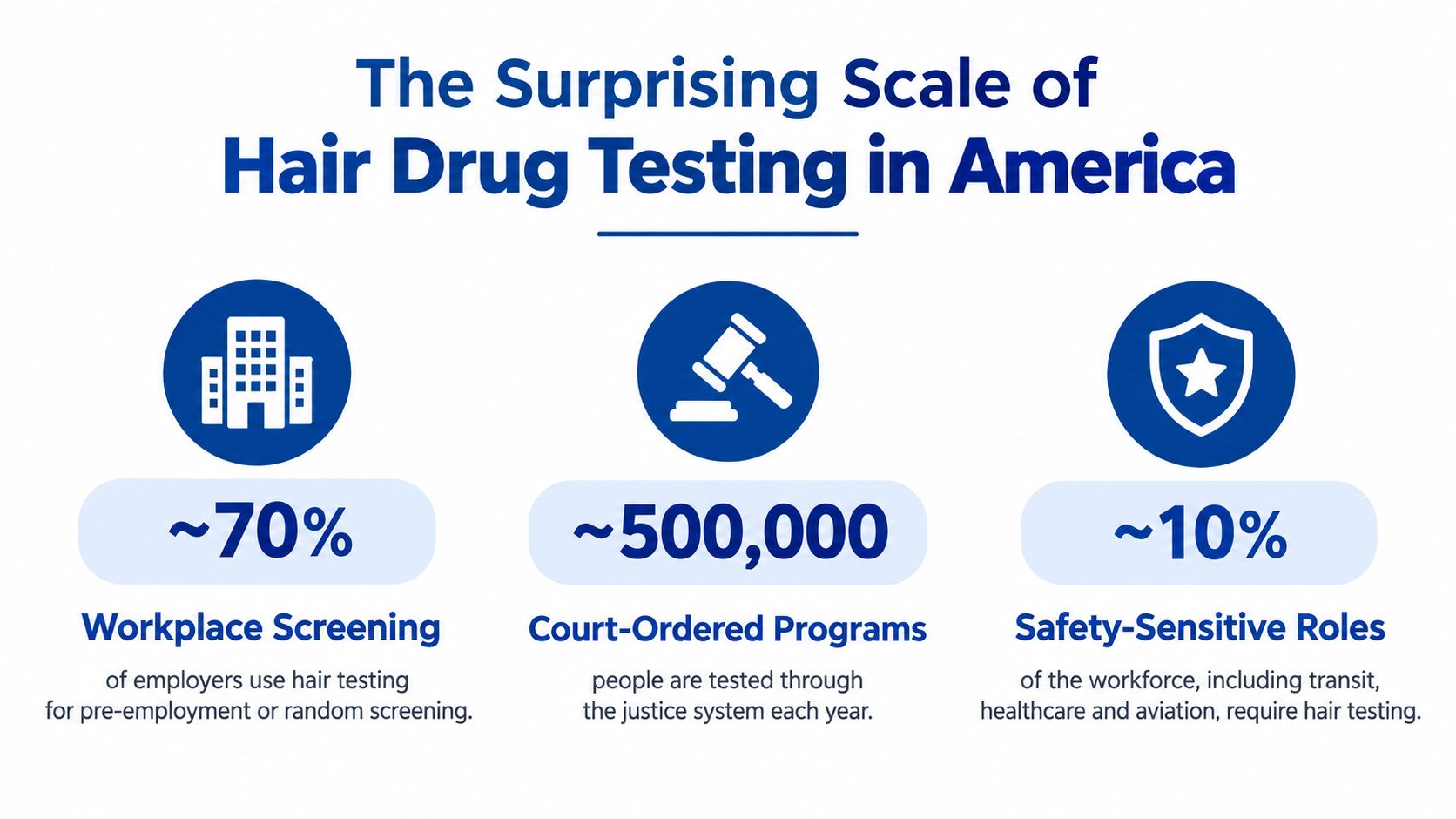
The phrase hair drug test is often assumed to be a fringe screening method. The 2025 Quest Diagnostics data says otherwise, because 19.1% of American workers tested by hair were positive, and that was up from 13.1% in 2021, a nearly 46% increase over four years. Quest also reported that marijuana drove 52.5% of positive hair tests in 2025, with marijuana positivity rising from 9.5% in 2021 to 15.1% in 2025. Quest Diagnostics workforce hair-testing report
That matters because commonness depends on the lens. Hair testing is not the default for every employer, and an industry report said only 7% of employers used hair testing in 2018, which means adoption is limited even when yield is high. But once an organization chooses hair testing, the results can be far more positive than many job seekers expect, especially in programs built to identify longer-term patterns rather than immediate impairment. Industry adoption context
Why the positivity rate matters more than the adoption rate
A hair-testing program with modest employer adoption can still have a heavy practical impact on the people who are screened. Quest's split between random workplace hair testing at 21.0% positivity in 2025 and pre-employment hair testing at 15.1% shows that the method is being used in different decision-making contexts, not as a universal hiring routine. Quest Diagnostics workforce hair-testing report
Practical rule: if a company uses hair testing, the sample is usually being treated as a history check, not a same-day snapshot.
That's why a simple “how many employers use it” answer misses the core issue. The better question is which employers, courts, or compliance programs prefer a matrix that can surface repeated use patterns over a longer window. In those settings, hair testing stops being niche and starts becoming a high-yield filter for people who are already in a monitored population.
From Forensic Science to Mainstream Screening
Hair testing looks modern in job-seeker articles, but the science behind it is old. The historical trail goes back to 1858, when Hoppe reported arsenic in hair, which showed that hair could serve as a forensic biospecimen long before workplace screening became common. SAMHSA's history then places the first modern hair drug test in 1977, developed by Baumgartner at the Wadsworth VA Laboratory for opiates. SAMHSA hair-testing history
By 1980, hair testing had entered Germany, and cocaine detection in human hair had been reported. The same historical record notes improved GC/MS methods in 1986, which expanded sensitivity and specificity and made the technique more defensible in serious screening and forensic contexts. By 1987, NIDA was already considering hair as a federal testing matrix, and the Society of Hair Testing formed in 1995, which marks real institutional acceptance rather than a temporary research fad. SAMHSA hair-testing history
What that timeline tells a compliance reader
The long development curve matters because it explains why hair testing is trusted in settings with serious consequences. A method that has moved from forensic toxicology into formalized professional use has had decades to mature, standardize, and narrow its weak points.
The practical implication is simple. If you got notified about a hair test, you're not dealing with an experimental screen that appeared yesterday. You're dealing with a method built around longer-window detection, which is exactly why employers, courts, and other decision-makers keep using it when they care more about pattern than impulse. Supreme Klean hair drug testing guidance
Where Hair Testing Is Most Commonly Used
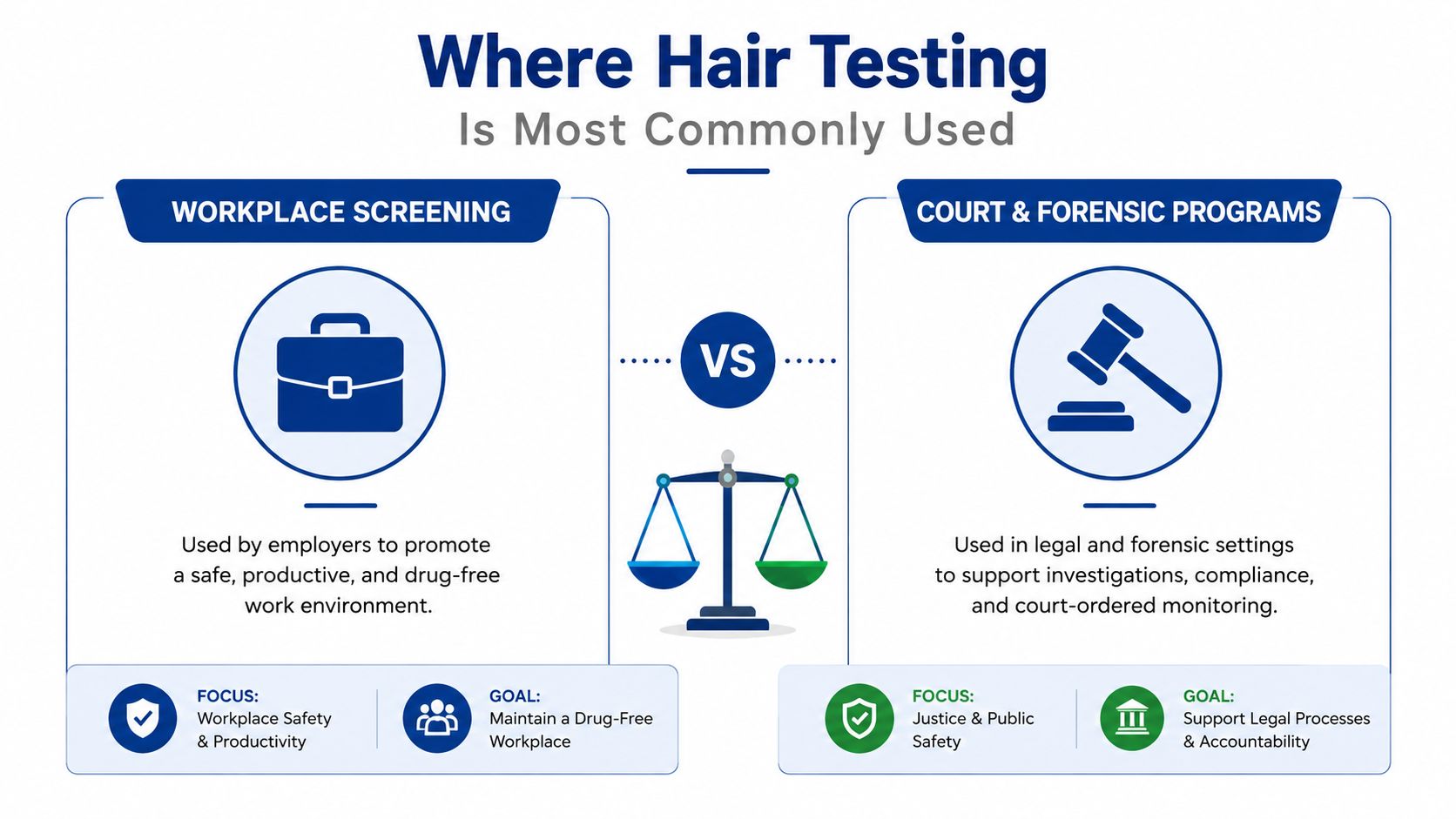
Hair testing shows up most often where decision-makers need a stronger read on historical use, not just recent exposure. In court-ordered testing, the National Institute of Justice cited overall hair positivity of 56%, compared with 34% for oral fluid, which tells you these programs are built around yield and evidentiary value. NIJ court-ordered testing article
Workplace screening versus court and forensic use
The same NIJ-cited materials also mention older paired workplace and criminal-justice data showing 12.6% positivity in hair versus 7.6% in urine across 193,000 specimens. That doesn't mean hair is universally “better,” it means it's often selected when the goal is to detect longer-term use rather than very recent use. NIJ court-ordered testing article
That difference changes how you should think about commonness. In routine hiring, hair testing may be used by a minority of employers, but in legal supervision, probation-related monitoring, and other high-scrutiny programs, it's chosen because it carries a different detection window and a different evidentiary purpose. The test isn't popular everywhere, but where the consequences are serious, it's often the matrix decision-makers trust.
Bottom line: hair testing is less about broad employer adoption and more about concentrated use in programs that need a longer lookback.
There's also a practical reason this method keeps showing up in those settings. When a tester wants a higher-yield matrix for historical use, hair often becomes the default choice over oral fluid or urine. That's why asking whether hair testing is “common” without naming the setting gives you the wrong answer.
A relevant overview of workplace screening differences is available in this drug testing in the workplace guide.
Understanding Mitigation Strategies Like the Macujo Method
People who get notified about a hair test usually aren't asking about the science in the abstract, they're asking what they can do next. Supreme Klean discusses Mike's Macujo Method as the current approach for people trying to reduce the risk tied to hair-residue testing, and it's important to separate that from the old Macujo Method, which came first and was tied more to lower to moderate THC exposure. Mike's Macujo Method guide
What the method is and what it isn't
Mike's Macujo Method is presented as a multi-step process, not a one-wash shortcut. The guidance emphasizes that the number of washes depends on the person's drug-use history and that the process relies on authentic Macujo Aloe Rid® Shampoo, not a substitute product. That distinction matters because people often overread internet advice and assume any shampoo routine will produce the same result.
The broader logic is straightforward. Hair testing records a long-term history, so any mitigation strategy has to deal with the structure of the hair itself, not just surface residue. That's why users researching this method are usually comparing product instructions, timing, and hair-history variables instead of looking for a one-size-fits-all answer.
How to read the instructions realistically
Treat the method as a preparation protocol, not a guarantee. If your testing timeline is short, your hair history is extensive, or your exposure pattern is repeated rather than isolated, you need to read the instructions carefully and avoid assuming one application is enough.
The old Macujo Method is still referenced in some places, but it's not the same thing as the newer version Supreme Klean prioritizes. If you're comparing methods, the key issue isn't branding, it's whether the instructions match the kind of exposure you're worried about and the detection window the tester is likely to use. A method built for lower or moderate THC exposure shouldn't be confused with a broader protocol aimed at heavier or more varied concern profiles.
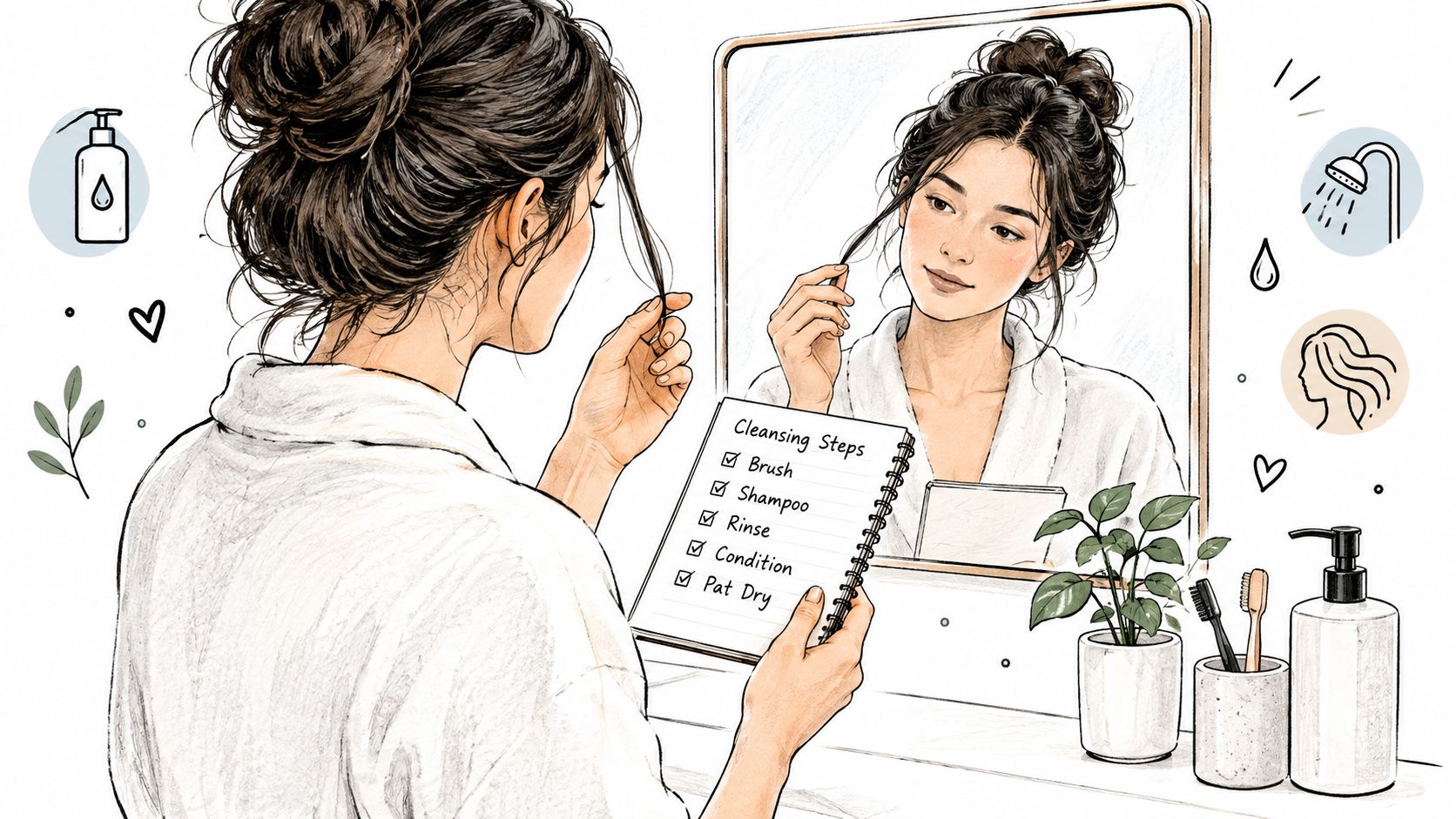
For readers comparing options, the practical point is not to chase miracle claims. It's to understand which products are part of the method and which are just add-ons, then line that up against the testing date and the history that could be reflected in the sample.
The Shift Toward Long-Term Detection Programs
The strongest trend in 2026 is not just more testing, it's a move toward long-window detection in programs where long-term history matters more than momentary impairment. Quest's 2025 workforce data showed rising positivity across major drug classes, including marijuana, cocaine, amphetamines, and methamphetamine, which suggests compliance teams are still finding substantial use patterns in the populations they screen. Quest Diagnostics workforce hair-testing report
Why family court and safety-sensitive screening keep expanding
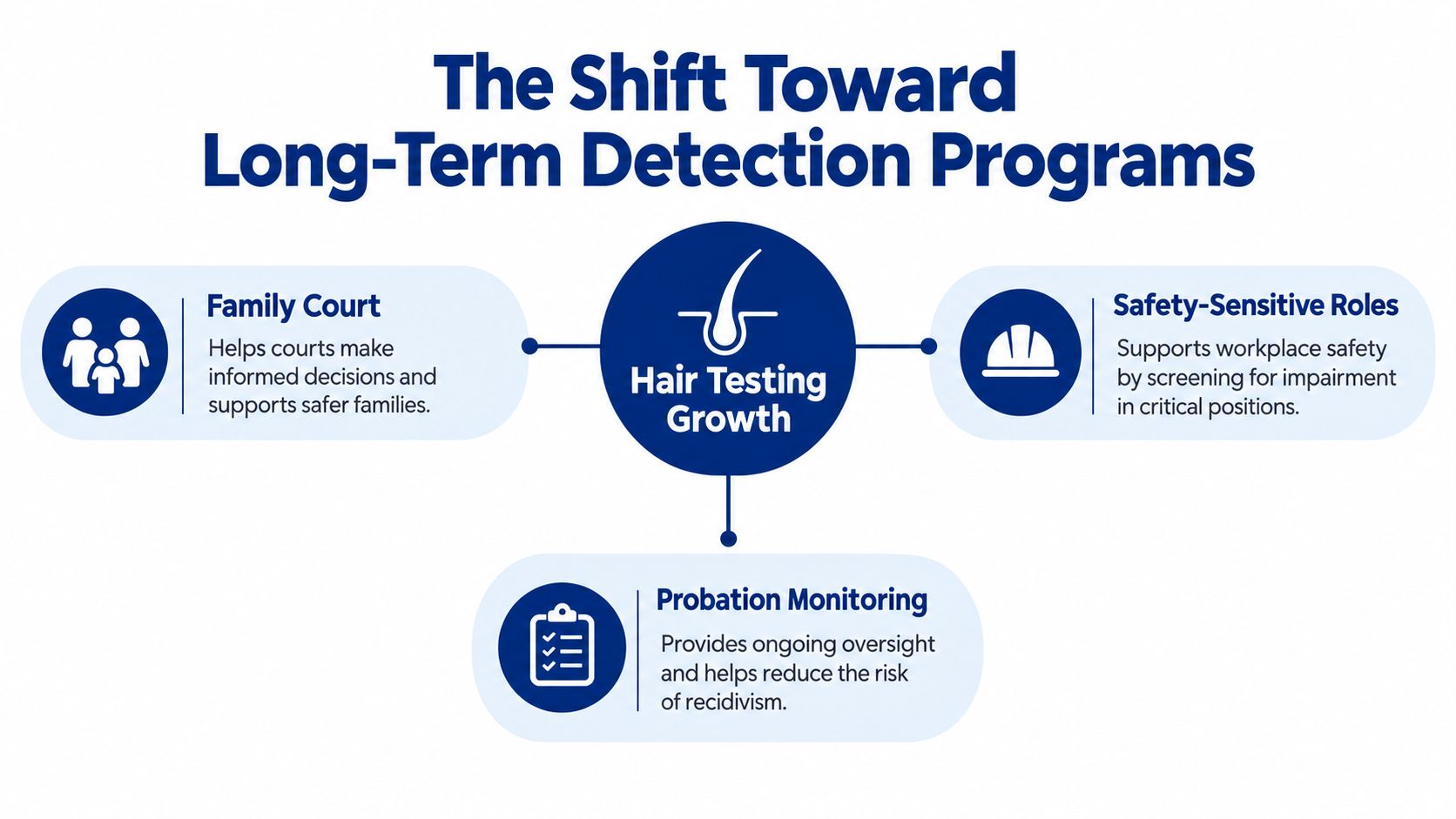
BBC reported in 2026 that hair strand tests have become central in UK Family Court proceedings, which fits the same logic seen in employment and supervision settings. When a case needs a broader historical view, hair gives decision-makers a record that urine or oral fluid may not capture as clearly. BBC reporting on Family Court hair tests
That shift is structural. Family court, safety-sensitive roles, and monitoring programs all care about patterns, recurrence, and whether use appears sustained over time. Hair testing fits those needs, so its role expands where consequences depend on history rather than a single recent event.
Takeaway: the more a program cares about repeated use, the more likely hair testing becomes part of the process.
Why that changes the conversation for workers and applicants
A lot of job-seeker content focuses on whether hair testing exists at all. That question is too small now. The more relevant issue is where the test is being used to document long-term behavior, and whether your own situation falls into a program that values that history.
That's why the commonness question has two answers. In employer adoption, hair testing is still a minority tool. In the populations that get tested, especially in legal and safety-sensitive contexts, it's a high-yield method that keeps showing up for the same reason, it captures a longer story.
How to Evaluate Your Own Exposure Risks
Your risk depends less on the headline “hair test” and more on the setting behind it. If you're being screened for routine hiring, the question is usually whether the employer uses hair at all. If you're in a court, probation, or safety-sensitive program, the question becomes whether the examiner wants a longer lookback window and a broader read on repeated exposure.
A simple way to judge the situation
Ask three things. First, is this pre-employment, random workplace screening, or a legal monitoring program. Second, is the organization likely looking for recent use or historical patterns. Third, how much of your hair history could still be reflected in the sample based on the tester's purpose.
At-home screening tools can help you understand your starting point, but they're still screening tools, not final legal answers. They're useful for getting a rough read on risk, but they don't replace the actual collection method, the lab workflow, or the context of the test you were notified about.
Practical rule: don't judge your risk by internet anecdotes. Judge it by the testing context, the likely detection window, and the history the sample can carry.
The key takeaway is simple. Hair testing is not the most common test in every hiring funnel, but it's common enough in high-scrutiny settings that ignoring it is a mistake. If your notice came from a court, probation office, safety-sensitive employer, or another program built around history, you should treat the test as a long-window screen, not a one-day snapshot.
If you've been notified about an upcoming hair test, Supreme Klean offers hair-testing guidance, at-home test options, and product information for people comparing preparation strategies and screening tools. Visit Supreme Klean to review the available resources and decide what fits your timeline and testing context.
Built with the Outrank tool
